
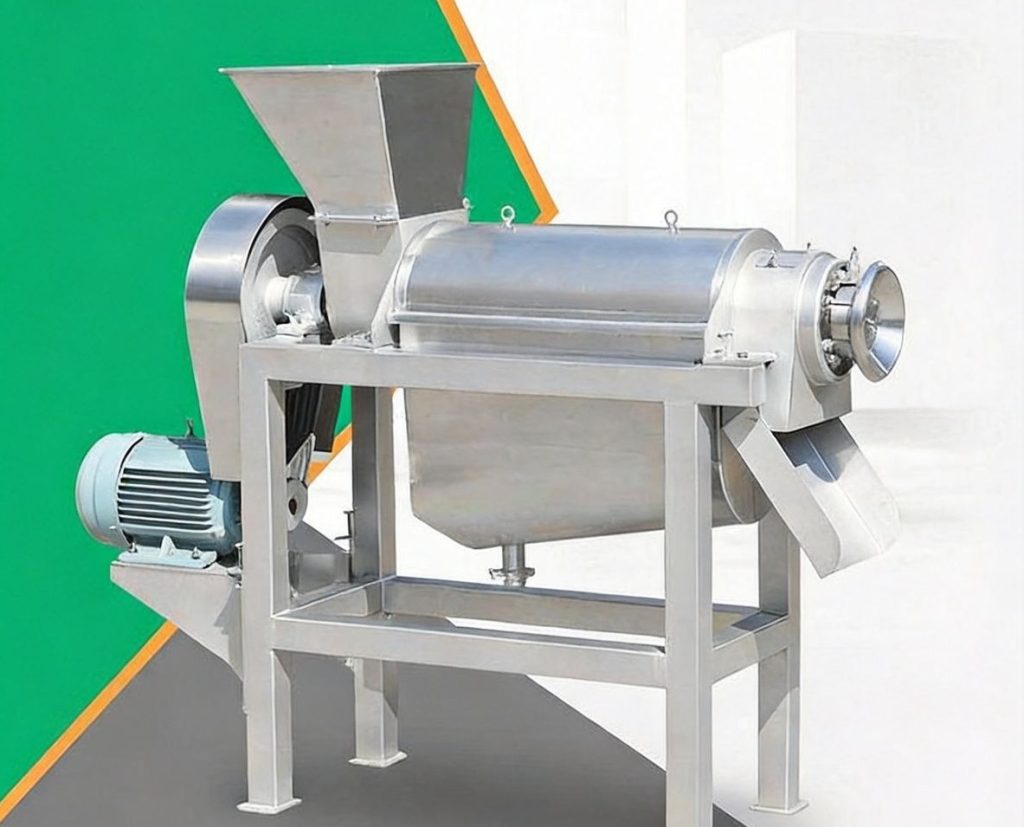
Which Machine Fits Your Material?
A quick guide to matching screw type with what you’re processing.
Soft Fruits & Vegetables
Apple, tomato, pineapple, carrot — single-screw handles 70–90% yield with ease.
Fibrous / Tough Residues
Grape pomace, sea buckthorn, spent grain — twin-screw delivers higher pressure and drier cake.
Seeded / Stone Fruits
Mango, citrus, stone fruit — choose a crusher + press combo or pre-crush upstream.
SCREW PRESS · DEWATERING · JUICE EXTRACTION
Stop Losing Juice in the Pomace.
Press 85–90% Out — Continuously.
A proven screw-press solution that turns fruit & vegetable waste into profit: higher yield, drier pomace, and 24/7 uninterrupted operation.
85–90%juice yield
<60%pomace moisture
0.2–5 t/hcapacity range
10+countries deployed
The Profit Leaking Out of Your Pomace
Traditional crushers and simple presses leave far too much behind. If your line still looks like this, you’re giving away money by the ton.
60–70%
Low juice yield
Ordinary crushing only releases part of the cell liquid — most of the value stays locked in the pulp.
80–90%
Wet pomace
High-moisture waste is costly to haul, hard to dry, and nearly impossible to resell or reuse.
Batch
Slow, labor-heavy
Manual loading and stop-start cycles cap your throughput and keep labor costs climbing.
How the Screw Press Works
A tapered shaft and shrinking chamber do the hard work — continuous, automatic, and self-regulating.
🍎
FeedPre-crushed material enters the hopper
→
🔩
CompressTapered screw builds rising pressure
→
💧
SeparateJuice drains through the screen cage
→
🌾
DischargeDry pomace exits through the adjustable cone
① Tapered Screw Shaft
Root diameter grows while pitch decreases toward the outlet — every centimeter squeezes harder. The heart of the whole machine.
② Perforated Screen Cage
Stainless 304, standard 0.6 mm (optional 0.3 / 1.0 mm). Quick-release design for fast cleaning; expect 3–6 months of service life.
③ Adjustable Back-Pressure Cone
Spring- or handwheel-loaded discharge head. Gap of 1.5–2 mm balances yield and dryness for each recipe.