
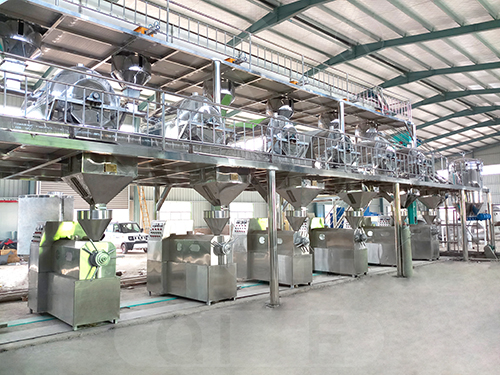
1. Hulling and roasting: preparing the seed
In a complete oil pressing operation, the first step is hulling. Seeds that need their shells removed are fed into a dedicated huller, which cracks the shell and separates it from the kernel.
Next, the seeds that require roasting are heated — usually peanut and sesame. Roasting does two things at once: it raises the oil yield, and it gives the pressed oil a fuller, richer aroma. This is where the roasting drum comes in. Sesame in particular has to be roasted — it lifts the extraction rate and gives the oil a fragrance that carries far beyond the kitchen.
2. Pressing: the core of the line
Then comes the main event: the oil press itself. The roasted seed is fed into the press, where it is advanced and compressed stage by stage along the barrel. What comes out at the other end is oil with a bright, clear colour and a clean, appealing aroma.
Today’s presses are integrated machines. A single unit handles a range of oilseeds, and operation is straightforward — these are screw presses with automatic temperature control and built-in vacuum filtration.
3. The three-core set — and why auxiliary equipment matters
A good oil press alone does not make good oil. A complete set is built around three core machines: the oil press, the roasting drum and the huller. What you add around those three depends on the seed you are pressing — and getting that set right is a precondition for getting the oil right.
Hullers themselves come in several types, each suited to a different raw material. The most common are:
- Peanut huller
- Coconut shredder
- Walnut sheller
- Sunflower seed dehuller
All of these are auxiliary equipment for oil pressing. Roasting drums are more standardized — most producers either build their own or buy a professional rotary drum roaster.
4. Filtration and screening: the stages that decide quality
Beyond hulling, roasting and pressing, two more machines are hard to do without: the oil filter and the screening machine.
The filter does what its name says — it removes sediment from the pressed oil. There are two types: the standard oil filter and the vacuum oil filter. The screening machine works right after hulling: raw material goes in, and substandard kernels and debris are screened out, so that only the best material reaches the press. That is how you get oil of consistent quality — and oil you can stand behind.